Arabata. The other Pietrapertosa.

In the Lucanian Dolomites, a maze of narrow streets and houses carved into the rock preserves the traces of a history stretching back to ancient times.
There are places we know for the reasons that have made them famous. And others that surprise us when we decide to look at them from a different perspective.
Pietrapertosa is one of them.
Nestled amongst the spectacular rock formations of the Lucanian Dolomites, it is one of Basilicata’s most recognisable sights. A village that seems to spring directly from the mountain, with houses nestled on the slopes and rocks dominating the landscape.
But beyond its most famous views and the thrill of the Volo dell’Angelo, Pietrapertosa harbours another story – a quieter one, hidden amongst its oldest streets.
This is the story of the Arabata.
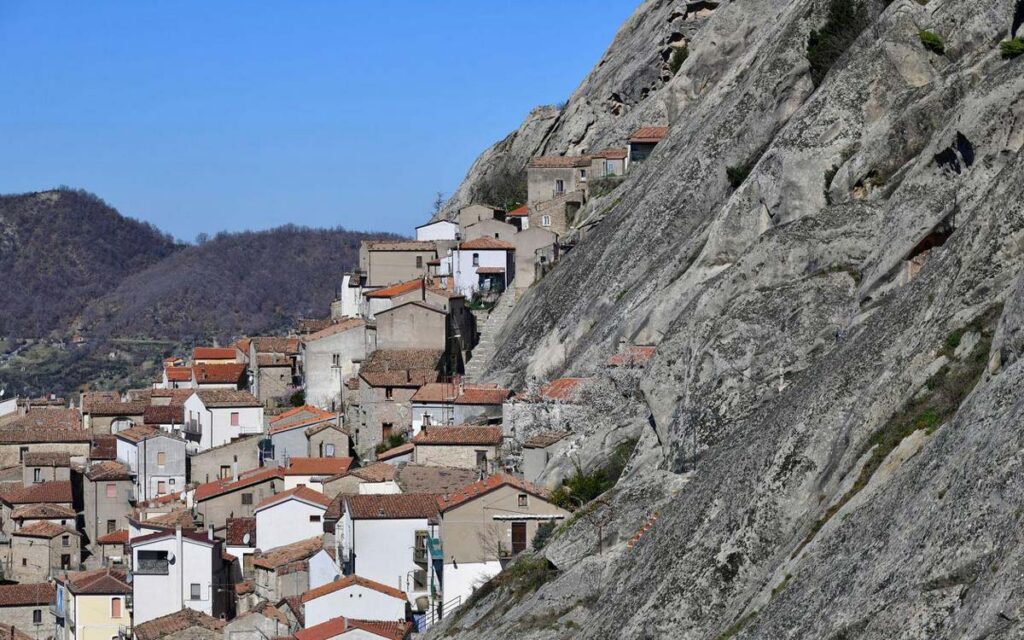
A neighbourhood that tells the story of an unexpected past
Arabata is the oldest neighbourhood in Pietrapertosa, traditionally linked to the Arab presence in the area during the Middle Ages.
Its name evokes this heritage, but it is above all its distinctive urban layout that makes it so striking.
Here, the houses cling to the rock face, the stairways follow the natural slopes and the narrow streets wind their way through narrow passages and small open spaces.
There is no clear distinction between what has been built and what is part of the mountain.
Stone becomes a wall, a shelter, a foundation. The architecture seems to adapt to the landscape rather than alter it.
It is a form of coexistence between humankind and nature that says much more than just a building style.
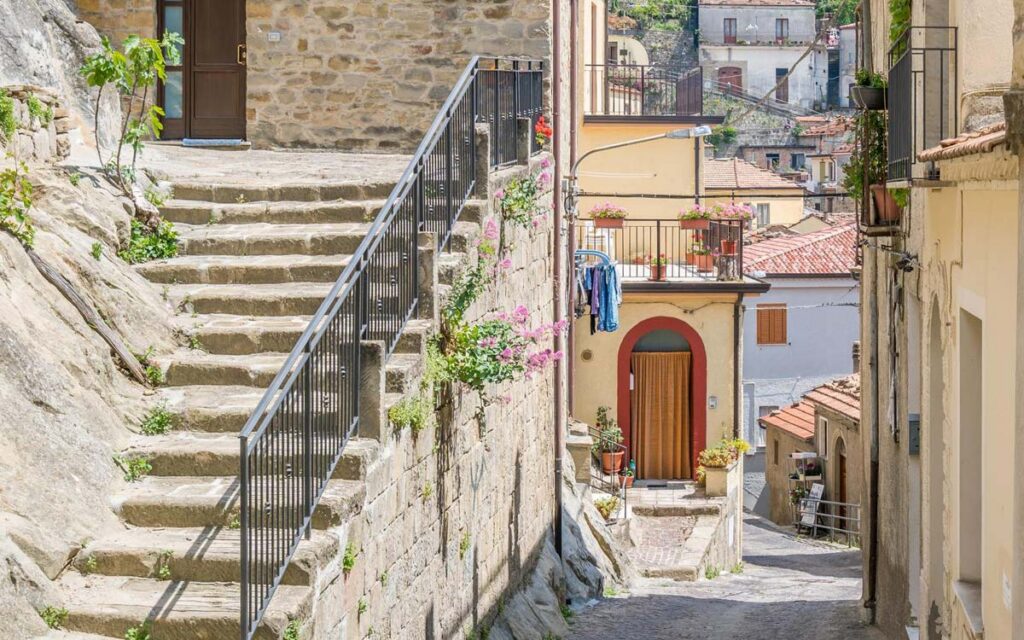
When the mountain becomes architecture
Walking along the Arabata means seeing Pietrapertosa from a different perspective.
No longer just the magnificent backdrop of the Lucanian Dolomites, but the details of a village that has grown to follow the contours of the landscape.
A staircase winding its way between the houses. A passageway carved out beside the rock face. A façade that seems to blend seamlessly with the natural rock face on which it rests.
These are details that illustrate the ability to live in a complex environment, turning its constraints into everyday solutions.
The neighbourhood’s historic layout bears witness to the Arab presence, even though the buildings we see today date from different periods and have undergone various transformations.
And it is precisely this layering that makes it so interesting: Arabata is not a neighbourhood that has remained unchanged over time, but a place where history has continued to leave its mark.
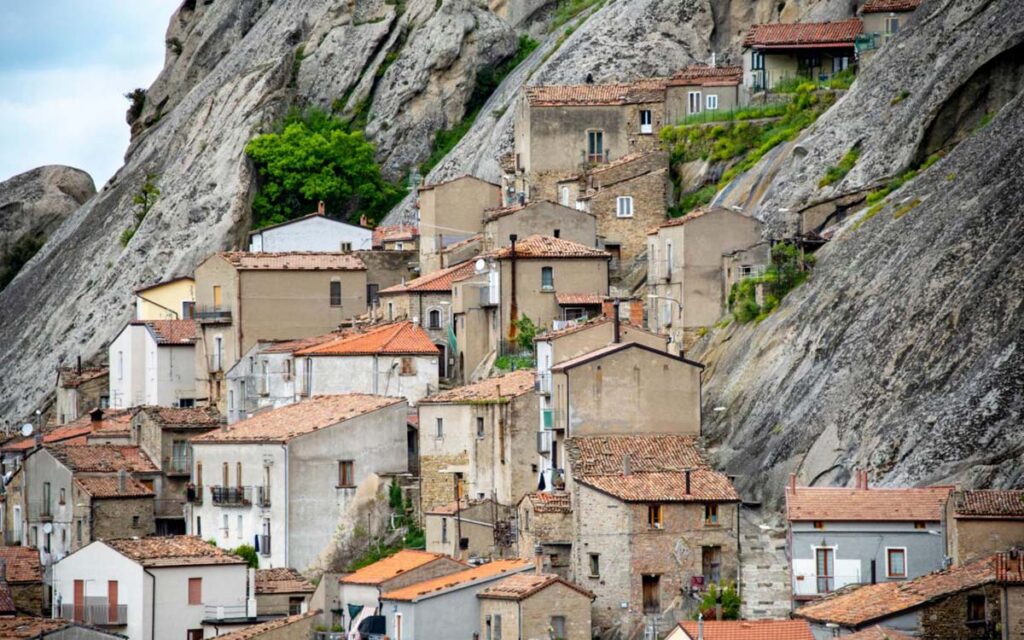
The other side of a well-known village
Pietrapertosa is a destination that catches the eye even from a distance.
Its rocks, panoramic views and the silhouette of its houses create an instantly recognisable landscape.
The Arabata, on the other hand, asks us to come closer.
To wander through the narrow streets, observe the shapes of the houses, and reflect on the relationship between architecture and the landscape.
It is a discovery that changes the way you look at the village.
Because alongside the Pietrapertosa of great emotions lies that of the small details: the historical traces, the transformations, and the solutions that tell the story of how a community has learnt to live amongst these mountains.
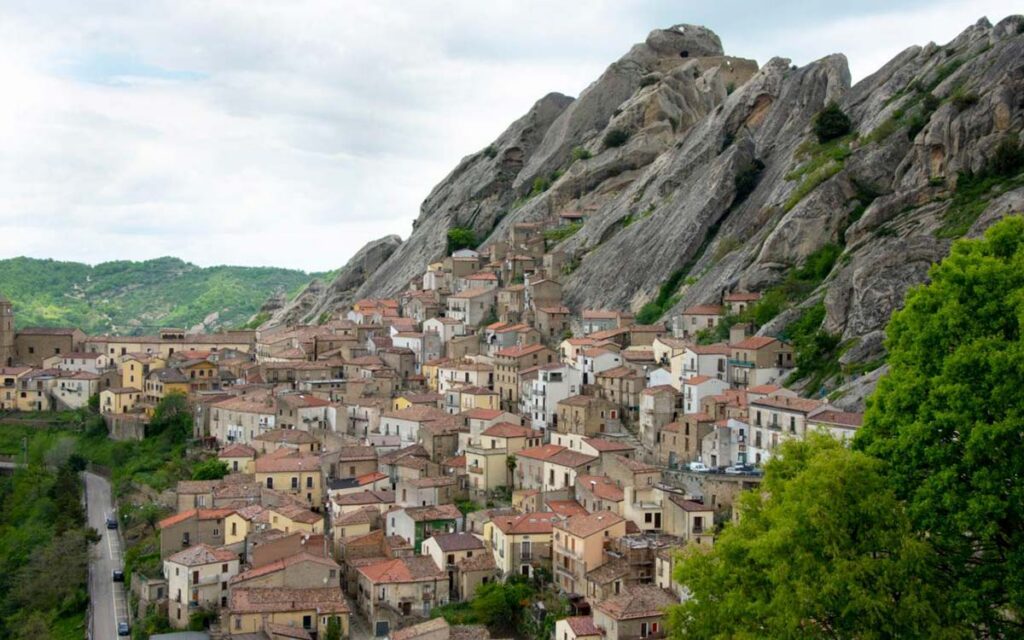
Discovering the Arabata
L’Arabata is situated in the historic centre of Pietrapertosa, in the province of Potenza, amidst the Lucanian Dolomites.
The best way to explore the neighbourhood is on foot, through the narrow streets and up the stairways that follow the slopes of the village. It is advisable to wear comfortable shoes and allow plenty of time for the walk so that you can take in the views and architectural details.
The visit can also provide an opportunity to explore the rest of the historic centre and the countryside surrounding the village.
But my advice is not to rush things.
Because Pietrapertosa has plenty to offer even beyond its best-known attractions.
And sometimes, to really discover a place, all you need to do is take a different route
Sources Tourist Attractions in Basilicata e Ministry of Culture
Photos from the web


 Italian
  English